


National Geographic 2012 November
Publisher: National Geographic
Format: Paperback
ISBN: none
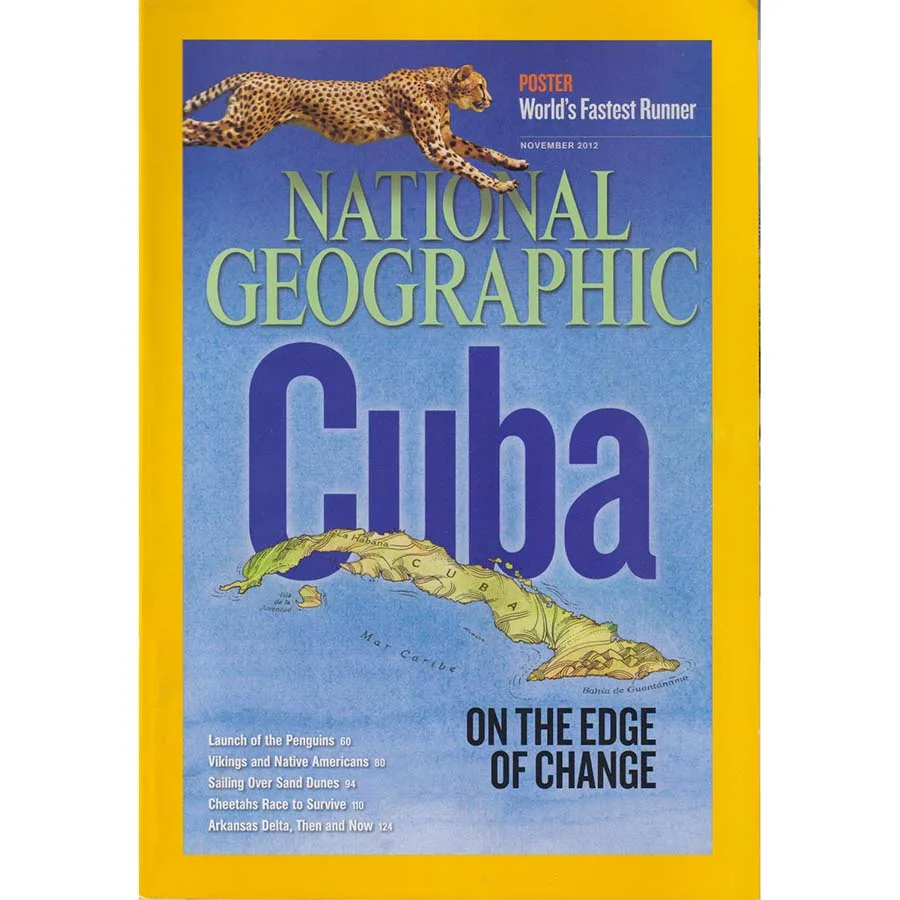
National Geographic, November 2012 is basically a two-in-one deal: geopolitics on the cover, adrenaline as a free gift, and a big yellow frame holding it all together like a responsible adult. The headline says “Cuba: On the Edge of Change”, but the real first thing you notice is a cheetah flying across the top like an urgent reminder that, whatever your plans today, you are not moving fast enough.
Yes: this copy includes the cheetah poster, still attached—a delightful bit of print-era generosity where the magazine quietly slips you a wall-sized embodiment of velocity. You can almost hear it purring: work harder. Or, more likely: stop scrolling and go outside. Either way, it’s a spectacular bonus for anyone who likes their reading material to come with a built-in motivational animal.
The main feature heads to Cuba, poised in that particular moment of history where everything feels suspended: old systems, new money, shifting expectations, carefully controlled change that still somehow leaks through the cracks. Nat Geo does what it always does—puts you on the streets, in the homes, inside the texture of daily life—then zooms out to the bigger forces tugging at the island like unseen currents. It’s not the cliché postcard Cuba (though you’ll get the colour and character); it’s Cuba as a living place trying to decide what it becomes next, while the rest of the world watches like a spectator at a tense chess match.
And because this is National Geographic, the issue refuses to be just one thing. Alongside Cuba you get a proper buffet of “how is this all in the same magazine?” delights: Launch of the Penguins (because sometimes you need wholesome chaos in a tuxedo), Vikings and Native Americans (history as a slightly prickly meeting of worlds), Sailing Over Sand Dunes (humans insisting that even deserts should be used for stunts), Cheetahs’ Race to Survive (speed with an existential deadline), and Arkansas Delta, Then and Now (landscape and labour, change measured in rivers and generations).
The irony is that the theme threads through everything: change. Cuba changing. Ecosystems changing. Histories being reinterpreted. Penguins doing whatever it is penguins are doing, probably changing direction at the last second for no reason. Even the cheetah poster is basically a graphic representation of modern life: run, but also try not to go extinct while doing it.
Condition: Good, which is exactly right for a magazine that’s meant to be handled, thumbed, revisited, and occasionally left open on the coffee table as a silent flex. Sold by Crappy Old Books, a name that makes this feel even better—because there’s something wonderfully fitting about finding a slick, globe-spanning, change-obsessed issue (with a bonus cheetah) in a place that sounds like it sells dusty paperbacks and accidental life advice for pocket change.
Keep browsing: See more National Geographic books Other books by National Geographic
